%202.png)
Abbey Dalton
March 2024
Abbey, a first-generation lawyer at Moores, co-founded and co-chairs the Disabled Australian Lawyers Association. She is a passionate advocate for disability inclusion in the legal profession and works to advance social justice for underrepresented communities.
The views and experiences shared in this interview are those of the speaker and do not necessarily reflect the official views of Women in Commerce and Politics (WCP).
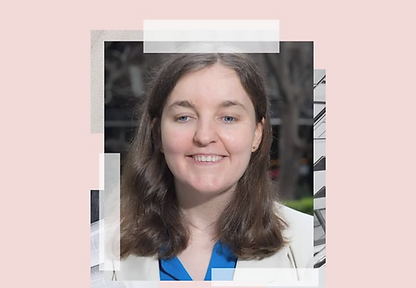
“I wanted to ensure I could best utilise the legal mechanisms that already exist, as well as advocate for reform where necessary to ensure that disabled people are able to participate and thrive in all aspects of life.”
Abbey Dalton
Q1
What inspired your career in law?
I’m the first lawyer in my family, and in the first generation to go to university. I didn’t know any lawyers until I started law school, but from a young age I’ve always known that’s the pathway I wanted to take. My family always encouraged me to leverage my education wherever possible. I’ve always been extremely passionate about social justice and having a career that enabled me to impact our broader community. For me, there are very few black and white answers, and I enjoyed deep analysis, oral and written advocacy so law seemed like the best way to pursue a career that reflected my values.
I think it’s also important to note that as a disabled person, there’s always been a strong understanding that the law, while sometimes convoluted and inaccessible, can be a really powerful tool for our equality within society. As someone who’s witnessed people close to me experience discrimination and systemic exclusion, and had my own experiences, I was keen to ensure I could best utilise the legal mechanisms that already exist, as well as advocate for reform where necessary to ensure that disabled people are able to participate and thrive in all aspects of life.
Q2
You currently work at Moores, what are the best parts of this job and what parts of this job keep you inspired?
I currently work as a lawyer in the Discrimination, Child Safety and Safeguarding team at Moores. Moores is a mid-sized firm that is here for good, which means we do work for values aligned clients, largely in the not-for-profit sector. I absolutely love my job and cherish the opportunity to do meaningful work that benefits our community.
As part of this role, I do a mix of proactive work such as advice, policy review and training sessions, to ensure that organisations are set up for success and can be leaders in upholding human rights, whether that be for their employees, children at school, or children and vulnerable people within their community. I also do reactive work when challenges arise, be it breakdowns in employment relationships, discrimination claims, or child safety investigations when reportable conduct has occurred. These matters can be challenging, but I really value the opportunity to support organisations through these matters and enable them to respond in a calm, compassionate and trauma-informed manner.
I’m really inspired by the work we do as a firm, our drive to have a positive impact on our community, and my team’s shared care and commitment to upholding the rights and dignity of groups that have traditionally been overlooked or marginalised by existing power structures.
You co-founded the Disabled Australian Lawyers Association, what are you hoping to do with this association to help people with disabilities feel more seen in this field?
Q3
I co-founded the Disabled Australian Lawyers Association (DALA) in March 2021 alongside two other disabled lawyers, with the purpose of advocating for greater representation and inclusion of disabled people in the profession. We have two key objectives. First, we want to create a space for disabled lawyers and law students to connect with each other, network and share experiences of legal practice as a disabled person. When I was in law school, I didn’t know any other disabled lawyers, and that was pretty isolating. If you don’t have that representation, it’s hard to feel confident that there’s a place in the industry for you.
Our other key objective is to work with organisations to break down the barriers that currently exist, that are limiting the participation of disabled people in the profession. We want firms to understand the immense value that disabled people bring to their organisations, and feel confident to make the (often minimal) adjustments required so disabled lawyers can effectively participate in the workforce. We’ve been blown away by the interest from firms, and it’s really wonderful to see how many organisations want to do better and just need some guidance to implement best practice.
What do you think that Institutions/Universities/Companies can do to help individuals with disabilities gain employment in law and social justice?
Q4
The most important thing is to hire and promote disabled people. It’s great to say you want to learn more and want to support disabled people, particularly in social justice organisations, but the best way to do that is to give them a job. In many cases, most learning will happen through exposure. This is also crucial if your organisation does work in the disability space, as this work should be directly informed by disabled people. Nothing about us without us.
Secondly, it’s really important to facilitate open communication and have conversations about how to best accommodate disabled employees. A lot of the barriers disabled people face are attitudinal, so it’s on managers and leaders to move past any biases or misconceptions they may have and be open to learning. Often there’s a power imbalance, particularly with people at the start of their career, so it’s always valuable if employers take the lead on sharing what adjustments they will make, and show a willingness to work with the employee to create an environment that allows them to work most effectively.
Finally, formalised policies and training are also really valuable. This might include formal initiatives to offer targeted positions to disabled candidates, clear and accessible reasonable adjustments and flexible work policies, and manager training on disability. These things should be embedded in an organisation’s structure, rather than contingent on the goodwill of individuals so that systemic underrepresentation continues to be addressed.
What would you say to the thousands of women around Australia who dream of more?
Q5
Being ambitious is such a powerful thing, and I’d encourage women to consider how to translate that into practical strategies. My advice would be to work out what the things are that you care deeply about, and think about how you can get more involved in that space or movement. For me, some of the things I care deeply about are disability rights, having fairer, more equal laws, and equal access to education.
So, I actively tried to connect with disabled lawyers, volunteered with a law reform organisation where I did work on employment-related reform and volunteered with a tutoring and mentorship program to improve education outcomes for underrepresented students. And all of these things have been pivotal in leading me to my role now, as well as being experiences I’ve really cherished!
I’d also recommend finding yourself a good mentor and a group of personal and professional allies to support and champion the things you do. In particular, if you have an intersecting identity, seek out women with those same experiences. Having other women, particularly more senior ones, to share experiences and debrief with is invaluable. They’ll also be able to show you how to leverage your lived experience, and the challenges you may have encountered, as positive traits that set you apart from others in your industry.