%202.png)
Ashley Hernandez
August 2026
Hailing from an engineering background, Ashley Hernandez pivoted to sustainability consulting following a decade-long career in transport design. These days, she works on Infrastructure Sustainability ratings for large-scale projects and is the President of the Board of More Than Apples - a food redistribution program.
The views and experiences shared in this interview are those of the speaker and do not necessarily reflect the official views of Women in Commerce and Politics (WCP).
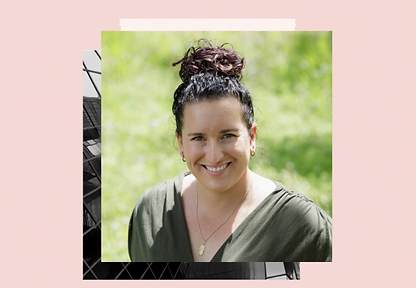
“Jump now, worry about the parachute later.”
Ashley Hernandez
You started out as a civil engineer and spent 12 years in transport before moving into sustainability consulting. What actually made you decide to switch, and was it a scary leap to make?
The transition was pretty organic to be honest. I began working in the transport industry in Australia, and shortly after I moved to the Middle East. While working on a major highway project in Abu Dhabi, a client asked me to deliver a “green kilometre”. At first, I was confused because I knew about sustainability, but I didn’t know what a “green kilometre” meant or how we were supposed to deliver one. The client knew sustainability was becoming important, but they didn’t really know either, so I was tasked with finding out what it actually involved.
I started researching sustainability in the roads, highways and transport space. I was already familiar with “Green Star Buildings”, so I thought it would be a similar concept but for transport. That research introduced me to sustainability rating systems and showed me how sustainability could be applied to infrastructure projects. For this specific project, we ended up using the Green Roads manual, which is a US-based system.
As I was learning this new system, I realised how well this rating system pairs well with my engineering background, so I thought why not explore it a little bit further. The more I learned about it, the more I just saw the value in it. I decided to run with it, slot myself in the niche industry and it has stuck with me until now. I think of it as just pure luck, to be honest and I’ve always been someone who is willing to take opportunities and figure out the details along the way.
You've lived and worked in Australia, the UAE, and South Africa. How did moving around shape the way you think about sustainability today?
One thing I always say is sustainability is a moving goalpost. What was sustainable 10 years ago can become common practice, so it’s important to understand where you are currently and what is realistic for that stage. Different countries are also at different points, for example, HVO renewable diesel is widely used in Europe, while in Queensland we still have suppliers who refuse even the lowest blends of biodiesel in their equipment.
I think the key is to start where you’re at. There’s a lot of ambition to be carbon neutral and achieve these big sustainability goals, but you can’t take 20 steps forward until you know you can take the first step. Just because something is being done in one country doesn’t mean it will apply somewhere else, particularly when there are different technologies, costs and levels of development. For example, HVO is currently around three times the price of regular diesel, so we can’t just swap everything over immediately. Instead, I think it’s about being pragmatic and asking what’s realistic, starting there, and then moving the goalpost incrementally rather than trying to immediately emulate the best practice in the world.
Another important point is that sustainability isn’t just about emissions or the environment; there’s also a major social and cultural side to it. These aspects can vary significantly between countries. For example, when we talk about infrastructure sustainability in Australia, cultural heritage and Indigenous cultural heritage are important considerations, but the approach to these issues would be very different in the USA or Europe.
I saw this firsthand when researching sustainability in the built environment. You can’t simply take something like Green Roads, which was developed for the US, and apply it directly in a country like South Africa because the cultural sensitivities and social issues are so different. Sustainability therefore isn’t just about economics or construction practices, it also has to consider the communities, cultures and social issues specific to each country.
Sustainability is a word that gets thrown around a lot. What does it actually mean in your day to day work at Losee, and what does real progress look like?
Sustainability can be a buzzword, so for me, day to day, it really comes down to accountability and ownership. At Losee Consulting, we work across many different projects and see a lot of different approaches to sustainability. The projects that achieve the best outcomes are those where sustainability is not just owned by the sustainability or environmental team, but where management buy-in exists and accountability sits at a higher level.
Real progress is about making sustainability everyone’s problem on a project. It’s not necessarily about being prescriptive and saying you have to do this, you have to do that, but about making sustainability part of everyday project decisions. That could mean choosing renewable fuels, trialling a new product or material, or contributing back to the communities where we work. Ultimately, if targets don’t have ownership at a level that can sort of enforce those targets, they are very difficult to meet.
Climate reporting is becoming mandatory for Australian businesses. For someone who knows nothing about it, why does it matter and what are most businesses getting wrong?
It all comes back to accountability, and moving businesses away from simply making greenwashing statements. Once reporting becomes mandatory and auditable, you can actually interrogate data and not just take it at face value. It creates a structure where businesses have to be able to show where their emissions information came from and how reliable it is.
I think the biggest issue businesses get wrong is data quality. The final emissions figure is only as reliable as the data that goes into it, so companies need to focus on data hygiene and make sure their information is complete, accurate and free from fundamental errors. From my engineering background, I always come back to the simplest question: “Is the data correct?”
Ultimately, businesses can’t plan for net zero if they don’t know where the starting line is. Good data is therefore the first hurdle. Companies can’t just gather information in whatever form they want and hand it to consultants; they need to be able to evidence it and trace where the data came from from start to finish. So, for me, climate reporting is fundamentally about accountability, with data being the most important part.
Outside of work you're President of the Board at More Than Apples and a qualified yoga teacher. For young women thinking about taking on volunteer or community roles alongside their careers, what advice would you give them and how do you make it all work?
My biggest piece of advice would be to work out what your values are as soon as you can, and revisit them regularly. I wouldn’t take on a volunteer or board position just for the sake of it; I chose to join the board of More Than Apples because the organisation aligned with my values around sustainability, reducing waste and supporting people in need. I think it’s important to find opportunities that genuinely align with what you care about.
At the same time, I think it’s important to recognise that your values will change throughout your life. One thing that came out of my yoga teacher training was doing a values assessment and setting a recurring quarterly check-in to reflect on what I value. My values at 20 are so vastly different from what they are now, and that’s okay. As your circumstances change, you should be open to reconsidering what matters to you rather than feeling tied to the person you were earlier in your career.
I’ve also had to apply this to my own career. Moving away from a fundamentally engineering-based role and the title of “engineer” was challenging because I questioned whether I was still as valuable without that title. I ultimately had to come back to what I actually valued and ask whether I wanted to return to engineering as my sole career or move towards work that aligned more closely with my values. Since you spend so much of your life at work, I think that alignment is important.
Your career spans engineering, consulting, nonprofit leadership, and teaching all at once. Was there a moment where you had to back yourself before you felt ready, and what would you say to young women still waiting for that confidence to arrive?
I’ve had to back myself many times, particularly when making big decisions like moving to the other side of the world. I didn’t always make those leaps confidently or feel completely ready beforehand. Sometimes, you just have to ask yourself, “why not?” and give it a go.
I’m also a bit of an overthinker, so one thing I’ve found helpful is to make the decision before you have time to overthink it. You don’t always need to wait for confidence to arrive first — you can make the choice, take the leap, and build that confidence along the way.